
Share Konstantine "Kosta" Tsandes's obituary with others.
Invite friends and family to read the obituary and add memories.
Stay updated
We'll notify you when service details or new memories are added.
You're now following this obituary
We'll email you when there are updates.
Select your format and elements to print

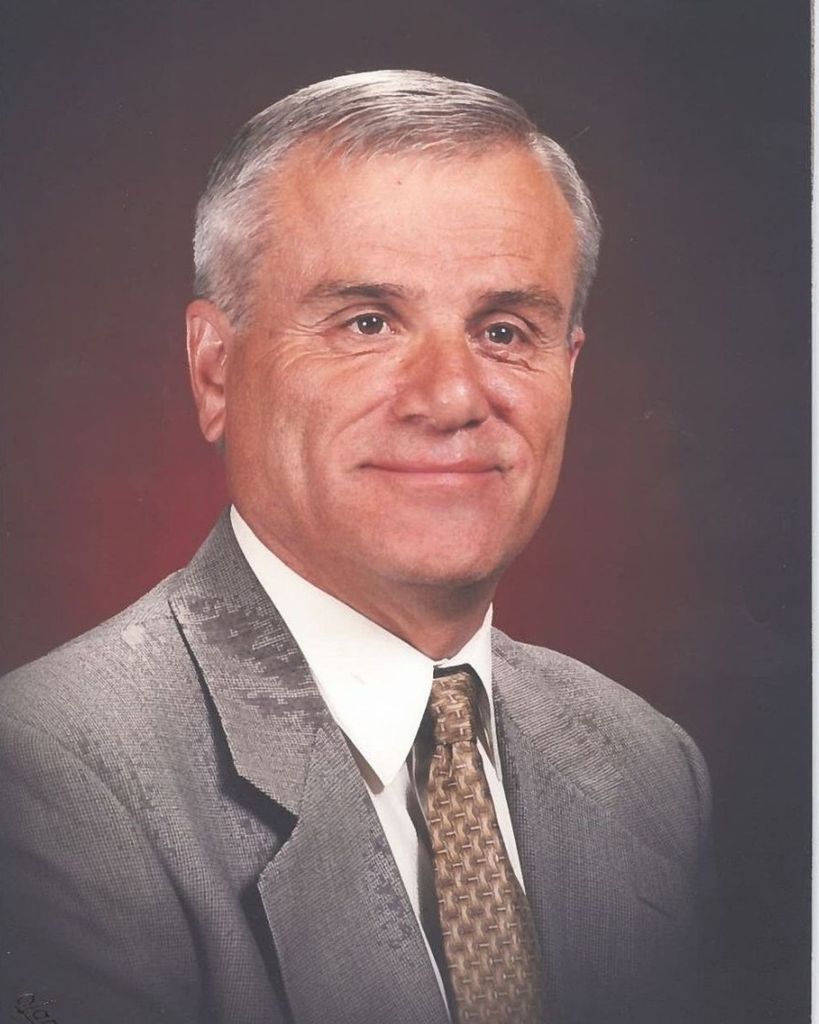
Konstantine "Kosta" Tsandes
Oct 2, 1945 — Oct 2, 2026
Cheyenne
Share Konstantine "Kosta" Tsandes's obituary with others.
Invite friends and family to read the obituary and add memories.
Stay updated
We'll notify you when service details or new memories are added.
You're now following this obituary
We'll email you when there are updates.
Select your format and elements to print



Kosta Tsandes, 82, of Cheyenne, Wyoming, passed away on his birthday, October 2, 2026, from complications of late-stage Parkinson’s disease.
Kosta, a proud Greek American and widely known as the “Godfather” of soccer in the state of Wyoming, was born in Stavros-Farsala, Greece, to Theodoros and Sophia Tsandes. He spent the first 13 years of his life in Greece before his family decided that a life in the United States would afford him greater opportunities. Kosta arrived in the U.S. — alone — at age 14, speaking no English. Upon his arrival, he lived in the care of his aunt and uncle, Andromache and John Hatsios, in Ames, Iowa, where he attended Ames High School and graduated in 1964.
He went on to attend the University of Northern Iowa, earning a degree in history in 1968. While at UNI, Kosta helped form and played on the university’s first men’s soccer club — an early indication of the role the game would play throughout his life. While at UNI, he also met his future wife, Nancy, with whom he would spend nearly six decades.
Following college, Kosta enlisted in the United States Air Force. He served four years, including two years overseas, before being assigned to F.E. Warren Air Force Base in Cheyenne, Wyoming. Kosta loved Cheyenne and the state of Wyoming, and it would become his home and the community where he would spend much of his life teaching, coaching and introducing generations of young people to the game he loved.
After completing his military service, Kosta returned to the University of Northern Iowa, where he earned a master’s degree in history in 1972. The following year, he began his career as a teacher at Carey Junior High School. There, he taught seventh-grade geography and coached football, wrestling and track. He also formed a coed soccer club at Carey that competed against schools in northern Colorado.
This was the beginning of a remarkable effort to build the sport of soccer in a state where organized opportunities to play were still limited.
In 1977, Kosta helped establish Cheyenne’s first recreational youth soccer league. He was also involved in forming the city’s first adult soccer team, which competed in the Denver League. As interest in the sport grew, Kosta believed Wyoming’s young players needed a higher level of competition. In 1982, he helped establish the Cheyenne Sting Soccer Club, creating greater competitive opportunities for young players. He often traveled the state at his own expense to help foster the growth of soccer and promote a model that other Wyoming communities would eventually follow.
Kosta transferred to Cheyenne East High School in 1979, where he taught geography, current issues, American history and economics for approximately two decades. At East, he formed a boys soccer club and helped other high schools around Wyoming establish clubs of their own. Those teams competed against one another while Kosta and others advocated for soccer to become an officially sanctioned Wyoming high school sport.
After a number of rejected efforts, Kosta’s ever-present determination paid off when the Wyoming High School Activities Association sanctioned varsity soccer in 1985. The first games were played in the spring of 1986, with Kosta serving as the first head coach of the Cheyenne East boys varsity soccer team.
Over the next two decades, Kosta built East into one of America’s premier high school soccer programs. His teams won eight state championships, including the first four Wyoming high school boys’ soccer titles. At one point, the Thunderbirds went unbeaten for 38 consecutive matches, and in 2001, East finished the season ranked No. 12 in the nation by the National Soccer Coaches Association of America. An extraordinary number of his players went on to compete at the collegiate level — an incredible accomplishment for a state with such a small population.
Kosta finished his high school coaching career with an overall record of 195-36-25, a winning percentage of .844. That winning percentage ranked among the top 30 high school soccer coaches in the United States at the time.
In 1995, Kosta received the Wyoming Distinguished Service Award for boys’ soccer from the National Federation Interscholastic Coaches Association. U.S. Senator Alan K. Simpson wrote personally to congratulate him, commending Kosta’s “efforts and dedication” and calling him an asset to his school, community and state.
Kosta’s vision for soccer continued at the collegiate level as well. In 2002, he was instrumental in helping Laramie County Community College establish its men’s soccer program, where he served as the first head coach for two seasons.
In 2008, Kosta received one of the highest honors in Wyoming athletics when he was inducted into the Wyoming Sports Hall of Fame.
For all his accomplishments as a coach, Kosta considered himself an educator. Teaching and coaching were inseparable parts of his life’s work. In a biography reflecting on his career, he wrote simply: “Teaching and coaching have made for a very rewarding career and given the chance, I would choose the same career again.”
Away from the classroom and soccer field, Kosta was a devoted husband, father, grandfather and avid outdoorsman. He could often be found enjoying what might have been the greatest love of his life — chasing pheasants in the agricultural fields near Hawk Springs, Wyoming, with his dogs Zorba, Zeus and Hercules. He loved introducing others to the outdoors, particularly other young Greek immigrants he met throughout his life in Cheyenne.
His Greek heritage always remained an important part of his life. He served as a board member at Saints Constantine and Helen Greek Orthodox Church in Cheyenne and was a tireless volunteer at the church’s annual Greek Festival, where he served his famous souvlaki. He also served as president of Cowboy Chapter 211 of the Greek fraternal organization AHEPA, which promotes Greek ideals, community service and civic responsibility across the United States.
Kosta married Nancy Baresel on June 4, 1967, in Waterloo, Iowa. Together, they shared 59 years of marriage and raised two children.
He is survived by his wife, Nancy Tsandes; son Ted Tsandes and his wife, Darcy, and their children, Konstantine and Evangelos; son Nick Tsandes and his wife, Jamie, and their children, Theodora, Konstantine and Marco; sister Theodora Gaiganis and her husband, Stavros; and sister-in-law Peggy Ward and her husband, Britt.
He was also a beloved uncle to many nieces and nephews and leaves behind a number of cousins throughout Greece.
He was preceded in death by his parents, Theodoros and Sophia Tsandes, and his sister, Evangelitsa Drachmanis.
A viewing will be held on Thursday, October 8 from 5-7 pm at Schrader, Aragon and Jacoby Funeral Home, 2222 Russell Avenue in Cheyenne, with the traditional Greek Trisagion memorial prayer service at 5:30 pm.The funeral service will be held on Friday, October 9 at 11 am at Saints Constantine and Helen Greek Orthodox Church, followed by burial and reception.In lieu of flowers, the family asks that memorial contributions be made to Saints Constantine and Helen Greek Orthodox Church of Cheyenne.
Kosta’s legacy can be measured in championships, victories and honors, but its greater measure is found in the lives he touched. For decades, he taught young people in his classroom and on the soccer field. He challenged them to work, compete, learn and improve. He helped build opportunities that had not existed before him, and generations of Wyoming players and coaches benefited from what he started.
The game of soccer in Wyoming exists because Kosta Tsandes was here.
And for his family, friends, students and players, his legacy extends far beyond the game.
To send flowers or plant a memorial tree in memory, please visit our flower store.
Service Schedule
Upcoming Services
Guestbook
Visits: 171
This site is protected by reCAPTCHA and the
Google Privacy Policy and Terms of Service apply.
Service map data © OpenStreetMap contributors